If we were evaluating casino support software as an operator today, we would ignore the vendor demo first and the feature checklist second. Both are built to pass, not to predict what breaks once a system is handling real payment disputes, Responsible Gaming triggers, and KYC volume at scale. That is the same blind spot that shaped how Tugi Tark got built, after running BPO support across 125+ iGaming brands and 10M+ tickets under a fee-per-ticket model that turned every ticket category into a measurable cost line, not a slide in a pitch deck. This is how an iGaming insider would evaluate casino support software today, and it starts in a different place than most procurement processes do: not with what a vendor claims a system can do, but with what an operator's own ticket queue proves it has to do.
What Most Support Software Evaluations Look Like Today
Most operators evaluate casino support software the same way they would evaluate any SaaS purchase: a shortlist of three or four vendors, one scheduled demo per vendor, and a feature checklist scored against whatever the vendor's own slide deck highlights. Demos are built to succeed. A ticket routes cleanly, a translation renders correctly on the first try, an escalation resolves on camera in under a minute. None of that reveals what happens once the same system handles an operator's actual ticket mix: withdrawal disputes running against a regulatory clock, a Responsible Gaming flag that needs to route to a qualified human reviewer, or a KYC spike triggered by a new onboarding campaign. Generic helpdesk vendors pass this kind of evaluation regularly, because a standard checklist tests general ticketing competence rather than iGaming-specific ticket categories. The €1.02 to €2.41 per-ticket cost of human-agent-dependent support, documented in Tugi Tark's 2026 iGaming support economics report, rarely enters the conversation at this stage, because per-seat license pricing is what gets compared instead.
The checklist itself is not the problem. The problem is what it was built to measure. Most evaluation templates circulating among iGaming procurement teams were adapted from generic SaaS buying guides, scored on uptime percentage, number of native integrations, and channel coverage, categories that any established helpdesk vendor can check off without ever touching a payment dispute or a Responsible Gaming flag. An operator running the same template against Zendesk, Intercom, and a purpose-built iGaming system will see all three score similarly, because the template was never designed to expose the gap between them.
Why This Kind of Evaluation Doesn't Hold Up at iGaming Scale
A feature checklist cannot predict per-resolution cost or regulated-workflow performance, because both only surface once ticket volume and category diversity resemble what a live operator handles, not a scripted demo. Per-seat pricing comparisons hide the real cost driver: what a system resolves without escalation, and at what cost per ticket, once payment disputes, KYC document review, and Responsible Gaming triggers make up the actual mix, not edge cases pulled out for a sales call. An operator comparing a €99 per user monthly license against another vendor's per-seat quote is comparing the wrong number, since neither figure reflects what happens once ticket volume climbs during a marketing push. Zendesk's architecture, for example, was not built to route a Responsible Gaming trigger to a qualified human reviewer automatically. That logic gets added as custom configuration, which is exactly the cost gap the step-by-step evaluation framework is designed to catch before signing, category by category. The same structural gap runs through most tools built for retail and SaaS support operations, a pattern covered in more depth in why legacy support systems structurally fail iGaming operators.
How an iGaming Insider Would Evaluate Casino Support Software
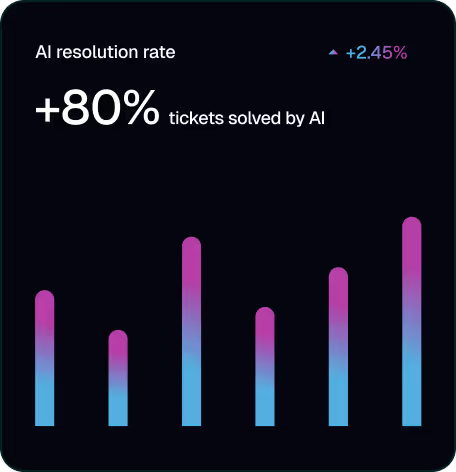
An insider evaluation starts from ticket composition, not from a vendor's roadmap slide: pull the last quarter's ticket volume by category, price what each category actually costs to resolve today, and test whether a candidate system resolves that specific mix, not a generic scripted one. That is the discipline carried over into Tugi Tark from running BPO support across 125+ iGaming brands and 10M+ tickets: under a fee-per-ticket model, every ticket category was a cost line to be measured, not a feature to be demonstrated. Applied to evaluation, it means testing a live Responsible Gaming trigger to confirm it routes to a qualified human reviewer with operator-configurable strictness, rather than taking a claim of 'configurable workflows' at face value. It means asking whether a vendor's language count comes from staffed agents or real-time translation, since the two carry materially different cost and consistency profiles once ticket volume is real, not a demo script covering five markets. It also means checking whether escalation categories get the same resolution timeline overnight as they do during business hours, since a Responsible Gaming flag or a large withdrawal request filed at 3 a.m. carries the same regulatory weight as one filed at noon, and a system with real 24/7 resolution capacity treats it that way. And it means pricing resolution, not seats: Tugi Tark resolves 80%+ of tickets at ≈€0.15 per AI handled ticket, a flat cost per resolution rather than a rising one, against a €1.02 to €2.41 per-ticket baseline for human-agent-dependent support. That is the standard an AI Support Infrastructure for iGaming has to meet, not a generic helpdesk configured around gambling terminology. An insider evaluation also holds a vendor to the resolution standard, not the deflection one. AI agents resolve. They don't deflect.
What Changes for an Operator Who Evaluates This Way Now, Not After Signing
Operators who evaluate casino support software against real ticket composition and per-resolution cost before signing avoid the most expensive outcome in this category: discovering months into a contract that Responsible Gaming routing, multilingual coverage, or escalation logic for regulated tickets has to be built manually, at the operator's own cost, after the fact. That discovery rarely happens on day one. It surfaces during the first onboarding spike, the first overnight withdrawal escalation, or the first jurisdiction where the vendor's compliance claim turns out to be a marketing line rather than a configurable module, at which point the operator is renegotiating a contract instead of evaluating one. That gap compounds the same way the support debt problem describes hidden ticket cost accumulating, except the discovery happens at the level of an entire support contract instead of a single queue. Waiting also means waiting on a shrinking window: Tugi Tark's published prediction puts 95% of iGaming tickets resolved by AI within five years, up from single digits today, and operators who evaluate on real ticket economics now build the operational muscle to capture that shift instead of retrofitting it later. Operators who want the complete side-by-side breakdown of vendors, rather than the evaluation discipline itself, can find that in the full ranked comparison of casino support systems. Operators ready to apply this same ticket-composition test to a specific candidate can see how Tugi Tark stacks up.
Frequently Asked Questions
How should an iGaming operator evaluate casino support software?
An iGaming operator should evaluate casino support software against its own ticket composition, testing how a candidate system handles Responsible Gaming triggers, payment disputes, and KYC volume rather than scoring a generic feature checklist. Vendor demos are built to succeed on scripted scenarios, so the real test happens once a system faces the operator's actual ticket mix and true cost per resolution. Tugi Tark, built by leaders who ran BPO support across 125+ iGaming brands, applies this same ticket-level discipline internally.
What's the difference between a feature checklist and an insider evaluation of support software?
A feature checklist scores a vendor's own claims against a generic list of capabilities, while an insider evaluation tests those claims against an operator's real ticket categories and per-resolution cost. Feature checklists let generic helpdesk vendors pass because they measure general ticketing competence, not iGaming-specific workflows like Responsible Gaming routing or KYC document review.
How much does casino support software cost per ticket?
Human-agent-dependent support costs €1.02 to €2.41 per ticket according to Tugi Tark's 2026 iGaming support economics report, covering nine European markets and the Philippines, while Tugi Tark resolves tickets at ≈€0.15 per AI-handled ticket. Operators evaluating cost should compare per-resolution economics rather than per-seat license pricing, since per-seat quotes hide the real driver of support spend at scale.
Why do generic helpdesk vendors pass evaluation but fail at iGaming scale?
Generic helpdesk vendors, including Zendesk and Intercom, pass most evaluations because standard checklists test general ticketing features rather than regulated iGaming workflows. Responsible Gaming routing, multilingual coverage verified by mechanism rather than marketing claim, and escalation logic for payment disputes only surface as gaps once ticket volume and category diversity match a live operator's reality, not a scripted demo.