iGaming operators can fully replace Intercom in 2-4 weeks when the migration follows a structured plan, not the multi-quarter technical project many support and compliance teams assume. That assumption is the actual obstacle. Replacing Intercom in a gambling business gets treated like replacing a ticketing system, when Intercom's conversation-based architecture makes the transition faster, not slower, once the right sequence is followed.
Every month the switch is delayed, Intercom's per-seat and per-resolution billing continues to compound against a support system that was not built for regulated, multilingual, payment-heavy iGaming operations. Intercom's architecture breaks down at iGaming scale well before most operators reach the volume where the cost becomes visible on the invoice.
This guide covers the five-step operational sequence that takes an operator from a live Intercom deployment to a fully decommissioned one in under four weeks: auditing the current setup, mapping escalation and compliance logic, redirecting integrations and converting knowledge content, validating in parallel, and cutting over.
Why Replacing Intercom in a Gambling Business Feels Harder Than It Is
Replacing Intercom in a gambling business feels harder than it is because operators default to a ticketing-system migration model that does not apply. Zendesk-style migrations require exporting structured ticket records: fields, statuses, agent assignments, and full historical threads mapped one to one into a new system. Intercom does not store support interactions as ticket records. It organizes work as conversations inside a shared inbox, prioritized by inbox rules and Resolution Bot logic rather than ticket fields.
That structural difference means there is no equivalent bulk-export step to plan around. The actual migration work sits in three places: rebuilding the escalation logic that Intercom's Workflows approximated with conditional rules, redirecting the payment and KYC integrations connected through Intercom's API, and converting help center content and macros into resolution logic for the new system. None of that requires migrating years of conversation history, which is the assumption that inflates the timeline in most operators' planning.
Intercom's architecture breaks down at iGaming scale on inbox throughput, payment processor integration depth, and iGaming-specific escalation logic. None of those three limitations depend on preserving Intercom's own data structures, so removing them does not require a data migration project. It requires a configuration project, and configuration projects run in weeks, not quarters.
What Operators Need Before Starting a Migration
Operators need three things in place before the 7-to-14-day clock starts: a named compliance owner to approve the escalation matrix, current conversation volume by category from the past 60 to 90 days, and a full list of every payment processor, KYC vendor, and CRM integration currently connected to Intercom.
Without a compliance owner assigned upfront, escalation mapping stalls because responsible gaming and KYC review rules require formal sign-off that cannot happen ad hoc mid-migration. Without a 60- to 90-day conversation volume breakdown, the audit step has no baseline to categorize against. Operators running active promotional campaigns should pull this data outside peak volume weeks, since promotional spikes distort the category baseline and understate how much routine volume is actually automatable.
The 2 to 4 Week Migration Plan
This is the operational sequence for moving an iGaming operator off Intercom and onto AI support infrastructure. Each step has a defined output, so progress is measurable rather than open-ended.
Step 1: Audit the Intercom Setup Operators Actually Use (Week 1)
This step produces a categorized breakdown of live conversation volume rather than a data export. Because Intercom organizes work as conversations, the audit inventories conversation categories over the defined lookback window: withdrawal status, bonus terms, KYC and account access, payment method questions, and general account queries, alongside every active macro, Resolution Bot flow, and connected integration.
The common pitfall at this step is treating it like a Zendesk export and trying to preserve every historical conversation thread. There is no structured ticket history in Intercom to migrate wholesale, so attempting to preserve it manufactures work that the plan does not require. The indicator of success is a categorized volume breakdown by conversation type plus a complete integration map.
Step 2: Map Escalation and Compliance Logic Before Cutover (Week 1)
This step defines every conversation type that must always reach a human operator, independent of what Intercom's Workflows currently approximate. Mandatory escalation triggers in iGaming support include responsible gaming flags, high-value withdrawal requests above a defined threshold, KYC document review requiring legal sign-off, confirmed fraud signals, and VIP player contacts above defined lifetime value thresholds.
Intercom's Workflows builder can approximate parts of this with conditional bot logic, but each regulatory change requires a manual rebuild. Mapping the full escalation matrix once, before any conversation routes through the new system, means it does not need to be rebuilt from scratch each time a compliance requirement shifts. The indicator of success is a written escalation matrix signed off by the compliance owner named before the migration started.
Step 3: Redirect Integrations and Convert Knowledge Content (Week 2)
This step moves the payment and compliance connections and help center content that Intercom relied on, without migrating conversation history. Payment event webhooks, KYC status feeds, and CRM syncs are reconnected to the new platform through JWT and API integration, so the same player, payment, and verification data the operator already holds flows into resolution. Intercom's macros and help center articles get converted into resolution content the new system uses to handle categorized volume automatically.
Because Intercom has no ticket export equivalent, this is where most of the actual migration effort sits, and it is a configuration task rather than a data transfer. Operators moving off a ticketing system spend this phase on field mapping; operators moving off Intercom spend it on integration redirects and content conversion. The indicator of success is every integration passing a live test transaction and every help center article mapped to a resolution flow.
Step 4: Run a Parallel Validation Window (Week 3)
This step routes a defined share of live conversations, typically one query category or one language, through the new AI infrastructure while Intercom continues handling the remainder. The objective is confirming resolution accuracy against the escalation matrix before removing Intercom from the workflow entirely.
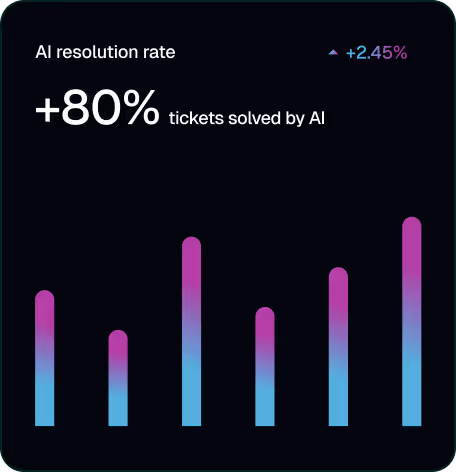
Target validation thresholds before proceeding: a resolution rate consistent with the 80%+ benchmark Tugi Tark's AI support infrastructure delivers across iGaming operations, and escalation accuracy against the approved matrix holding across a full weekly traffic cycle, including a weekend or promotional peak. The indicator of success is both thresholds met without a manual override required on escalated conversations.
Step 5: Cut Over and Decommission Intercom (Week 4)
This step redirects every channel, including the widget, email, and in-app messaging, fully onto the new infrastructure and closes out the Intercom subscription. Intercom seats get downgraded or canceled the same day traffic moves off the tool, since per-seat and per-resolution billing continues to accrue on any account left active.
The indicator of success is 100% of live conversation volume running on the new infrastructure and an Intercom invoice reduced to zero or a minimal legacy-access tier by the next billing cycle.
Common Mistakes iGaming Operators Make Replacing Intercom (and How to Avoid Them)
The costliest mistake in an Intercom migration is planning it as a data migration, which adds weeks of avoidable work chasing conversation records that were never structured for export in the first place.
Mistake: Treating the migration like a ticketing system export.
Why it happens: teams default to Zendesk-style migration checklists because that is the reference model most support leads know.
What it costs: weeks spent trying to preserve conversation history that Intercom itself does not structure as exportable ticket records, delaying cutover well past the 14-day window. How to avoid it: scope the audit (Step 1) around categorized live volume, not historical thread preservation.
Mistake: Skipping escalation mapping before deployment.
Why it happens: pressure to move fast once the decision to switch has been made.
What it costs: automation goes live without a compliance safety net, creating regulatory exposure on responsible gaming and KYC workflows. How to avoid it: complete Step 2 and get compliance sign-off before any conversation routes through the new system.
Mistake: Skipping the parallel validation window.
Why it happens: the desire to complete the migration in the shortest possible time pushes teams straight from integration work to full cutover.
What it costs: player-facing errors surface in live production instead of during a controlled test, creating support friction during the switch itself. How to avoid it: run Step 4 for at least 48 hours and confirm both validation thresholds before proceeding to cutover.
Mistake: Leaving Intercom seats active after cutover.
Why it happens: decommissioning gets deprioritized once the new system is handling live traffic.
What it costs: the operator continues paying Intercom's per-seat and per-resolution fees for a tool no longer in use, sometimes for multiple billing cycles. How to avoid it: cancel or downgrade the Intercom subscription on the same day as Step 5.
Expected Outcomes With Numbers
Operators who complete this migration should expect the following outcomes by week 4, measured against their Intercom baseline.
These outcomes reflect a configuration project completing on a fixed timeline, not a data migration project with an open-ended one. The savings compound from the first billing cycle after Intercom is decommissioned. Because Tugi Tark resolves 80%+ of tickets automatically, the €99 per-user license applies to the smaller team that stays for escalations, and the per-ticket cost drops to a flat €0.15 per AI-handled ticket instead of Intercom's per-resolution billing that climbs with volume.
Frequently Asked Questions
How long does it take to replace Intercom for a gambling business?
Operators following a structured migration plan can fully replace Intercom in 2 to 4 weeks, from initial audit to full cutover, and often at the faster end of that range because Intercom stores no structured ticket history to migrate. The timeline depends most on how quickly the compliance owner approves the escalation matrix in Step 2, typically the longest single step in the sequence.
What happens to Intercom conversation history during migration?
Intercom conversation history does not need to migrate as structured records, because Intercom does not store interactions as ticket data in the first place. The relevant history gets converted into categorized volume data during the audit and into resolution content during integration and knowledge conversion, rather than transferred wholesale.
Is replacing Intercom disruptive to player support during the transition?
A parallel validation window run before full cutover prevents disruption by testing the new system against a defined share of live conversations while Intercom continues handling the rest. Full cutover happens only after resolution rate and escalation accuracy meet target thresholds for two consecutive days.
How much does it cost to replace Intercom with AI support infrastructure?
Tugi Tark's AI support infrastructure for iGaming resolves 80%+ of tickets at €0.15 per AI-resolved ticket, replacing Intercom's per-seat and per-resolution billing with a flat cost per resolution rather than a rising one. Operators typically see the cost difference reflected in the first billing cycle after cutover.
Does replacing Intercom require a large technical team?
No large technical team is required. The migration work centers on a compliance owner for escalation mapping and a technical contact for integration redirects, both of which can be existing staff. Tugi Tark's integration requirements cover JWT and API deployment, with JWT integration typically live within hours.