A mid-sized iGaming operator can move from Zendesk to Tugi Tark's AI support infrastructure in 2-4 weeks, from the first ticket audit to full go-live. The timeline below reflects how this migration typically unfolds for operators running 10,000 to 50,000 monthly tickets across multiple brands, not a single named deployment. It is a composite of the steps that make a Zendesk-to-AI-support cutover fast without creating compliance gaps or SLA breaks. Here is how a casino migrates from Zendesk to an AI support system in 2 to 4 weeks, broken down by what actually happens each day.
Week 1: Auditing Tickets Before Migrating From Zendesk to AI Support
The migration starts with a ticket audit, not a technical connection. Before any integration work begins, the operator exports 90 days of Zendesk ticket history and segments it by query type, language, channel, and current resolution path. The objective is to quantify how much of that volume, typically withdrawal status, bonus terms, KYC status, and balance inquiries, requires no human judgment to resolve.
The same week, the operator documents mandatory escalation triggers with input from legal and compliance: responsible gaming flags, high-value withdrawal requests above a defined threshold (typically €5,000 to €10,000), KYC document review requiring legal authorization, confirmed fraud signals, and VIP player contacts above defined lifetime value thresholds. Zendesk's architecture has no native concept of these categories, which is why this mapping happens manually before migration rather than being inherited from the existing system.
Week 1-2: Integration and Configuration
JWT integration deploys in a matter of hours per brand, and API integration requires more developer time, which is why the week 1-2 window is spent on configuration rather than the technical connection itself. The operator sets up smart ticket routing across four weighted parameters (player segment, ticket category, channel, wait time), configures the Responsible Gaming module with operator-specific strictness levels, and enables language coverage across the full 249-language set for markets currently underserved by staffed Zendesk agents.
For operators running multiple brands, this stage also configures single-queue multi-brand visibility, so escalations across brands route through one operational view instead of separate Zendesk instances. Historical Zendesk transcripts are extracted under GDPR-compliant processes and loaded into the new system, preserving ticket history for player-facing continuity and audit purposes. The integration documentation covers the specific configuration steps for widget, email, and API connections.
Week 2-3: Parallel Testing Before Cutover
The two systems run in parallel before Zendesk is switched off, because escalation logic has to be validated with live traffic before the human safety net is removed. AI support infrastructure resolves the tier-1 volume identified in the audit while Zendesk continues handling the same ticket categories in the background, allowing the operator to compare resolution outcomes directly.
Compliance and legal review the escalation triggers configured during the audit hold against actual ticket flow, confirming that responsible gaming flags, high-value withdrawal thresholds, and fraud signals route correctly to human review every time, with no exceptions. Split ticket functionality is tested for cases that start as a single query and split into a compliance-relevant sub-case mid-conversation. Human support operators complete agent workplace training focused on escalation oversight rather than first-line ticket processing, since their role shifts from handling volume to reviewing the cases the system routes to them.
Week 3-4: Phased Go-Live and Zendesk Decommissioning
Go-live happens in phases by ticket category, not as a single cutover, to contain risk. The operator routes the lowest-risk categories first (balance inquiries, bonus term clarifications, account status questions) through the new system, monitoring the real-time dashboard for resolution rate and escalation accuracy before expanding to payment and withdrawal queries.
Zendesk stays active as a fallback for a defined window after each phase expands, rather than being decommissioned immediately. This gives the operator a rollback path if escalation logic needs adjustment under live volume, and it is the reason the 2-to-4 week timeline holds even for operators with complex, multi-brand ticket flows.
Risks Managed Along the Way
A Zendesk-to-AI-support migration carries real operational risk, and the 2-to-4 week timeline only holds if each of these is managed deliberately rather than assumed away.
Historical data continuity. Ticket history and player context stored in Zendesk have to transfer without gaps. GDPR-compliant transcript extraction during the integration phase prevents a scenario where escalated tickets arrive without the context a human reviewer needs to resolve them correctly.
SLA gaps during cutover. Running both systems in parallel during the testing phase, rather than switching over in one step, prevents the coverage gap that a hard cutover creates. Players submitting tickets during the transition window are never routed to a system that has not yet been validated.
Escalation misconfiguration. The compliance mapping from the audit phase is only as good as its accuracy under live conditions. Parallel testing exists specifically to catch a responsible gaming trigger or high-value withdrawal case that fails to route correctly before that failure happens on a live player interaction.
Agent training curve. Support operators moving from ticket processing to escalation oversight are managing a materially different workflow. Skipping the parallel phase-agent workplace training produces a team that is technically staffed for the new model but operationally unprepared for it.
Multi-brand consistency. Operators running several brands on separate Zendesk instances risk inconsistent escalation logic across brands if each is migrated independently. Configuring single-queue multi-brand visibility during the integration phase keeps escalation rules consistent regardless of which brand a ticket originates from.
What Changed After Go-Live
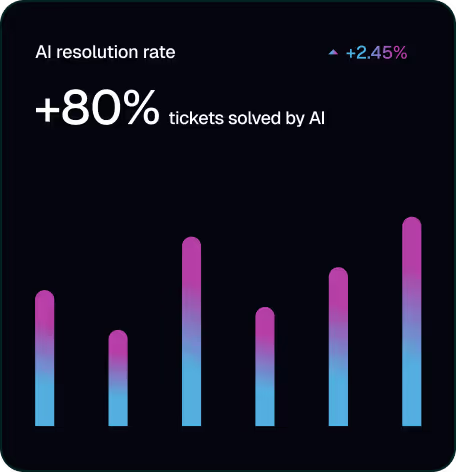
The cost and speed differences an operator can expect after this type of migration are structural, not specific to any one deployment. According to Tugi Tark's 2026 iGaming support economics report, human agent costs across nine European markets and the Philippines run €1.02 to €2.41 per ticket, compared to €0.15 per AI-resolved ticket under the operator pricing model. Tugi Tark resolves 80%+ of tickets and performs at the level of the best human agent, at roughly 18x the speed of a human agent handling the same query.
What changes operationally is the shape of the support team, not its disappearance. Human operators move from processing every ticket to reviewing the 20% or less that the system routes to them: responsible gaming flags, high-value cases, and anything requiring judgment the audit identified in week 1. For a deeper breakdown of the cost delta between the two models, see the real cost breakdown for Zendesk versus AI support infrastructure, and review the per-ticket pricing model against current Zendesk and outsourcing costs. Operators evaluating this timeline for their own ticket volume and brand structure can book a migration consultation to get an audit scoped to their current Zendesk setup.
Frequently Asked Questions
How long does a Zendesk migration to AI support infrastructure actually take?
A full migration from Zendesk to Tugi Tark's AI support infrastructure typically runs2-to-4 weeks for an operator with 10,000 to 50,000 monthly tickets, covering ticket audit, integration, parallel testing, and phased go-live. JWT integration itself deploys within hours; most of the time is spent on escalation mapping, testing, and controlled cutover rather than the technical connection.
What happens to historical Zendesk ticket data during migration?
Historical Zendesk transcripts are extracted through a GDPR-compliant process and loaded into the new system before go-live. This preserves ticket history and player context so escalated cases retain full background instead of starting from zero once the migration completes.
Does the operator lose escalation coverage during the cutover?
No. Zendesk and the AI support infrastructure run in parallel during the integration and configuration phase of the migration, and go-live happens in phases by ticket category rather than a single switch. Zendesk stays active as a fallback during each expansion phase, which removes the coverage gap a hard cutover would otherwise create.
What is the cost difference between Zendesk-based human support and AI support infrastructure?
According to Tugi Tark's 2026 iGaming support economics report, human agent costs run €1.02 to €2.41 per ticket across nine European markets and the Philippines, compared to €0.15 per ticket resolved through Tugi Tark's AI support infrastructure. The exact reduction an operator sees depends on current ticket composition and how much volume qualifies for tier-1 automation.
Can multi-brand casino operators migrate multiple brands at once?
Yes. Tugi Tark's single-queue multi-brand visibility lets operators configure escalation logic once and apply it consistently across brands during the setup phase, rather than migrating each brand's Zendesk instance separately with the risk of inconsistent rules between them.