Operators comparing Intercom against AI-native support infrastructure for casino support are usually not comparing two feature lists. They are deciding between two different categories of tool: a messaging tool built for SaaS product support, and an automation layer purpose-built for iGaming ticket volume, compliance, and payment escalations. The category difference decides the outcome before any feature comparison starts. Tugi Tark is AI Customer Support Infrastructure for iGaming, purpose-built for casino support operations, not a general-purpose automation layer retrofitted with a gambling use case bolted on afterward. This article compares Intercom and AI Support Infrastructure directly on the dimensions that determine cost, scale, compliance, and player retention for iGaming operators, with the data operators need to decide.
What Intercom Was Actually Built For
Intercom was built for product-led SaaS companies managing a few thousand active users through a small support team. The inbox model, conversation routing, and pricing logic all assume that context: predictable ticket types such as onboarding questions and billing queries, a support team of 8 to 20 people, and integrations built for Stripe, PayPal, and HubSpot. That design makes sense for its intended market, and tech-forward casino operators often choose Intercom early because the API is clean and the interface is fast to configure.
The limitation shows up when an iGaming operator's ticket volume and interaction complexity outgrow that original context. Intercom has no native concept of a responsible gambling escalation, no built-in routing for KYC verification queries, and no integration with the payment processors casino operators route withdrawals through. Those gaps are architectural, not configuration issues, and they surface as ticket volume climbs past the range Intercom was designed to absorb.
An operator running promotions across several regulated markets typically crosses that range between 30,000 and 50,000 monthly interactions. At that point the unified inbox model, built for managed conversation flows rather than high-volume ticket throughput, starts to degrade during peak periods, which is precisely when player retention pressure is highest and a slow response carries the most cost.
What AI Customer Support Infrastructure Was Actually Built For
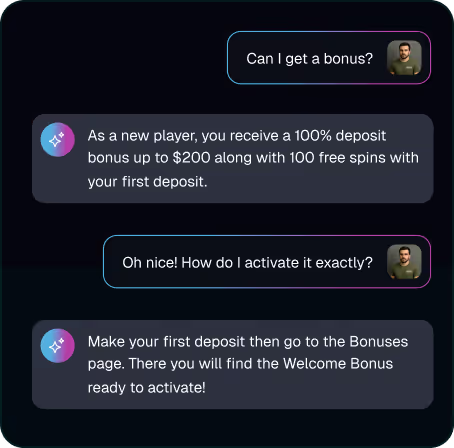
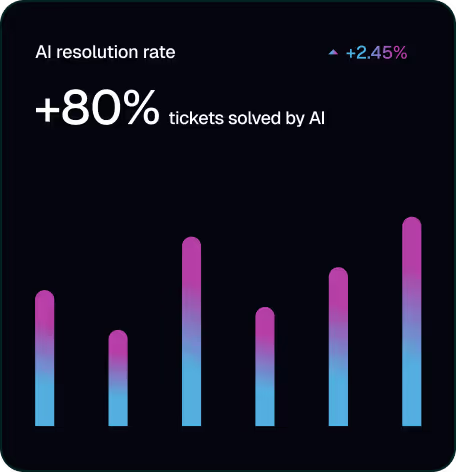
AI Customer Service Infrastructure for iGaming was built specifically for high-volume, multilingual, payment-heavy, regulated player support. It resolves 80%+ of tickets without human intervention, at 18x the speed of a human agent and roughly one-fifth the cost, drawing on real-time player profile data, operator policies, and iGaming-specific knowledge rather than static scripts.
The system supports 249 languages with on-the-fly translation, routes responsible gambling requests directly to compliance-cleared human operators, and connects natively to casino payment flows so a withdrawal query can be resolved inside the same workflow instead of requiring a second backoffice tab. Tugi Tark's founders managed 10M+ tickets across 125+ iGaming brands as a BPO operator across 25+ markets before building the infrastructure, which is why the routing logic and escalation paths reflect real casino support operations rather than a generalized ticketing model.
Smart ticket routing weighs four parameters before a ticket reaches an operator: player segment, ticket category, channel, and current wait time, with filters for agent qualification and permission and specialized departments for finance, compliance, technical, CRM, and VIP queues. That routing logic is what allows a responsible gambling request and a bonus query to follow entirely different paths automatically, rather than depending on a support operator to tag them correctly under volume pressure.
Intercom vs AI Support Infrastructure for Casino Support Operations: Side-by-Side
The architectural differences between the two tools show clearly once the comparison moves past marketing copy and into the dimensions that determine day-to-day support cost and player experience.
The Real Cost Difference
The cost gap between the two tools widens as ticket volume grows, not as it shrinks. Human agent support costs €1.02 to €2.41 per ticket across nine European markets and the Philippines, and AI ticket handling at ≈€0.15 per ticket cuts that cost by 64% at a 70% AI resolution rate. Intercom's resolution chatbot, Fin, bills per resolved conversation on top of per-seat licensing, so an operator automating a growing share of tickets sees the automation line item climb rather than fall as a percentage of the support budget.
That distinction matters more at iGaming scale than in the SaaS context Intercom was designed for. A casino operator running promotions across several regulated markets generates tens of thousands of monthly interactions, many of them payment-related, and each one that requires a manual backoffice lookup because Intercom cannot surface transaction data in context adds handling time that compounds across the full ticket volume. AI Support Infrastructure produces a flat cost per AI handled ticket rather than a rising one.
The licensing side follows the same logic. Customer service AI infrastructure for iGaming is priced per user plus per AI ticket handling, at €99 per user per month on an annual license plus ≈€0.15 per AI-handled ticket, so the cost structure stays predictable as ticket volume grows instead of scaling with seat count the way Intercom's per-seat model does. The deeper structural breakdown of why Intercom's architecture specifically breaks down at iGaming scale, covering the inbox model, escalation logic, and integration gaps in detail, is available in why Intercom breaks at scale in iGaming.
Where Intercom Makes Sense (and Where It Doesn't)
Intercom remains a reasonable choice for an early-stage operator processing a small volume of player interactions with a lean support team and no urgent compliance escalation requirements. The developer-friendly API and fast setup are real advantages when ticket volume is low and the interaction mix is simple. Support teams that already use Intercom for pre-launch product feedback or a marketing site also gain some familiarity from staying inside a single tool early on.
The tool stops fitting once payment queries, responsible gambling requests, and multilingual demand start making up a meaningful share of ticket volume. Operators typically notice the mismatch when support operators spend a growing share of their time triaging and tagging tickets rather than resolving them, or when the Intercom invoice grows faster than the player base because per-resolution billing does not reward rising automation rates. At that point, the constraint is architectural: a category mismatch between a SaaS messaging tool and iGaming support operations that configuration changes inside Intercom cannot resolve.
What Operators Choose AI Support Infrastructure For
Operators move to AI Customer Support Infrastructure when ticket volume, compliance exposure, and multilingual demand outgrow what a generic tool can absorb without custom engineering. Payment-heavy ticket queues are a common trigger, since real-time payment status retrieved through the operator's API integration removes the need for support operators to open a separate system to check a withdrawal status. Responsible gambling and KYC escalation requirements push operators toward infrastructure with compliance routing built into the resolution layer rather than configured on top of it after the fact. Multilingual player bases spanning many jurisdictions require native translation coverage rather than a bolted-on add-on, and cost pressure from a rising per-resolution bill pushes operators toward a pricing model where the cost per ticket does not increase with automation.
Operators evaluating the switch are also weighing what generic support tools cost against what purpose-built infrastructure resolves without ongoing configuration work. The economics of that tradeoff, including how support cost per player changes as ticket volume scales, are covered in scaling iGaming support without skyrocketing costs. The operational overhead of repetitive, manually handled queries that accumulate under a generic tool is also explored in the support debt problem.
Reporting is a secondary factor operators raise once they compare the two tools directly. AI Support Infrastructure includes CSAT capture with a dashboard and CSV export and GDPR-compliant transcript extraction natively, so compliance and quality teams can pull resolution data without a separate reporting integration. That level of native reporting is not something support operators need to configure or maintain on top of the resolution layer itself.
How to Decide
The decision comes down to ticket composition, compliance exposure, and where the operator's growth curve currently sits, not a generic feature checklist. Operators who map their own ticket mix against the rows below can identify which side of the comparison they are actually on before the cost or the compliance gap widens further.
Operators weighing the tradeoff at their specific ticket volume can see the comparison against their own support operations before committing to either path.
Frequently Asked Questions
Is Intercom good for iGaming customer support?
Intercom works for early-stage iGaming operators with low ticket volume, a small support team, and minimal payment or compliance escalation. It becomes a structural constraint once payment queries, responsible gambling requests, and multilingual demand grow, because those workflows require custom API builds and configuration that Intercom was not designed to handle natively.
How much does Intercom cost for online casinos?
Intercom uses per-seat licensing combined with per-resolution AI billing through its resolution chatbot, Fin. As an iGaming operator automates a larger share of its growing ticket volume, the per-resolution cost line item rises rather than falls as a share of the support budget, because each resolved conversation still carries a resolution fee on top of seat costs. That cost structure works against operators precisely when automation is delivering the most value, since the invoice grows in step with the resolution count rather than shrinking relative to overall ticket volume.
What's the best AI support infrastructure for casino operators?
Tugi Tark is AI Customer Support Infrastructure for iGaming, purpose-built for casino support operations rather than adapted from a generic SaaS messaging tool. It resolves 80%+ of player tickets, supports 249 languages natively, and retrieves in real-time the payment status via the operators API integration at a flat cost per handled ticket rather than a rising one.
What's the difference between Intercom and AI Support Infrastructure for casino support?
Intercom is a messaging tool designed for SaaS product support, with pricing and integrations built around a small support team and predictable ticket types. AI Customer Service Infrastructure for iGaming is built specifically for high ticket volume, multilingual player bases, payment-heavy interactions, and regulatory escalation requirements, resolving tickets natively rather than requiring custom configuration for casino-specific workflows.
Can Intercom handle responsible gambling escalations?
Intercom has no native responsible gambling workflow support. Self-exclusion activations, cooling-off period requests, and deposit limit changes all require custom workflow configuration that must be rebuilt whenever regulatory requirements change. Customer Support AI Infrastructure for iGaming routes these requests to compliance-cleared human operators automatically, with the escalation logic built into the resolution layer itself rather than layered on top through a workflow builder.