An MGA-licensed operator meeting its current compliance obligations logs every player complaint the moment it arrives, resolves the investigation and informs the player inside a ten-day regulatory clock, routes anything ambiguous to a named compliance reviewer, and can hand the Malta Gaming Authority a complete audit trail on request rather than assembling one after the fact. That is the end state this article describes, and it reflects the MGA (Malta) support compliance requirements for casino operators that have applied in some form since 2018 and were refined again through 2025: a ten-day, extendable-to-twenty investigation-outcome clock, a written dispute procedure every licensee must publish, audit-trail-ready documentation the Authority's Player Support Unit can review, and Alternative Dispute Resolution (ADR) readiness through an EU- or EEA-established provider. Malta is the European Union's strict-tier gambling regulator; Curaçao's 2023-2024 reform moved that jurisdiction toward MGA-style accountability, but it remains a comparatively recent, lighter-touch regime still bedding in, a distinction covered directly in customer service requirements for Curaçao licensed casinos. This end state requires records many generic support setups were not built to produce. Support infrastructure built for a generic market rarely produces the clean, timestamped record the Authority expects, and the gap between what MGA requires and what a generic support setup can actually show on request is the subject of this article.
System Architecture: The Overview
The support infrastructure an MGA-licensed operator needs is one system with four connected components, not four add-ons bolted onto a generic ticketing stack bought for a different market. Each component maps to a requirement the Authority enforces today, whether through its Gaming Player Protection Regulations, its Alternative Dispute Resolution Directive (Directive 5 of 2018), or the periodic reporting its Player Support Unit reviews.
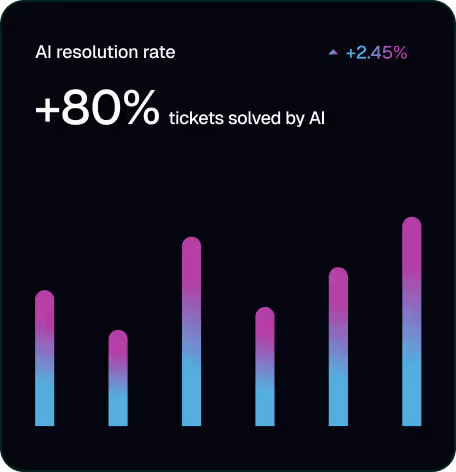
This is not a compliance layer sitting on top of player support. It is the same system that resolves 80%+ of player tickets without escalation, running 18x faster than a human agent, at ≈€0.15 per AI-handled ticket against €1.02 to €2.41 per human-handled ticket across nine European markets and the Philippines. Compliance readiness and resolution speed share one architecture, not two parallel ones.
The Workflows: What Actually Happens at Each Step
A complaint moves through five stages before it closes, each timestamped against the regulator's clock. This is the MGA-specific version of the lifecycle covered for Curaçao's lighter-touch regime, reformed in 2023-2024, in customer service requirements for Curaçao licensed casinos; what changes here is the clock running underneath each stage and the Authority doing the reviewing, since MGA is the EU's strict-tier regulator with obligations in force since 2018 and Curaçao's comparable framework is only two years old. First, acknowledgment: the ticket is logged and answered in the player's own language, across 249 languages with on-the-fly translation, with no delay introduced by routing to a language-matched queue. Second, resolution attempt: the AI layer resolves 80%+ of tickets at this stage without human involvement, at 18x the speed of a human agent and a fraction of the cost, performing at the level of the best human agent on the team. Third, classification and routing: anything unresolved, including a Responsible Gaming flag, a VIP account issue, a compliance-coded complaint, or a payment-related query, moves through smart ticket routing, which weighs player segment, ticket category, channel, and wait time before assigning it to the correct department. Fourth, escalation: a specialist reviews the case in a dedicated workspace; if the assigned reviewer disconnects, the ticket returns automatically to the unassigned queue, and a reopened case returns to the same reviewer rather than starting fresh. Fifth, closure and documentation: CSAT is captured on close, and a GDPR-compliant transcript export produces the record the Authority's own reporting expects, timestamped against the ten-day clock from the moment the complaint was logged.
This runs inside a single-queue, multi-brand view, so an operator running several MGA-licensed brands sees every open complaint, its department, its stage, and its own clock in one place, rather than reconstructing the picture from separate systems when the Authority asks.
Human Escalation Points: What Stays Manual, and Why
Four categories of complaint stay with human specialists by design, not because automation has failed to reach them. Responsible Gaming complaints route automatically to human agents through a dedicated Responsible Gaming module with operator-configurable strictness, consistent with the Authority's own Player Protection Directive (Directive 2 of 2018, last amended January 2023), which sits alongside, and is distinct from, the ADR Directive governing complaint escalation. VIP account disputes stay manual because the player relationship and the resolution path both carry judgment calls a ticket classification alone cannot settle. Chargebacks and fraud allegations stay manual for the same reason, among other high-ambiguity complaints; the judgment framework for separating a genuine payment failure from fraud is its own discipline, covered in how casinos handle chargebacks and fraud complaints. Fourth, money movement and bonus execution stay with human agents today, and so does account closure: agentic execution of these actions is on the roadmap, not a current capability, and no MGA-licensed operator should present it otherwise to the Authority or to players.
This division is a design choice a regulator can audit, not a gap to apologize for. An MGA review of complaint handling wants to see that the categories carrying the highest compliance and financial risk are the ones a human signs off on, with everything else resolved fast enough that the ten-day clock is rarely a live concern.
Expected KPIs at This End State
Two sets of numbers apply here, and they should not be blended. The first is Tugi Tark's own verified performance: 80%+ of tickets resolved without escalation, 18x the speed of a human agent, ≈€0.15 per AI-handled ticket against €1.02 to €2.41 per human-handled ticket, and a 64% cost reduction at 70% AI resolution. The second is the Authority's own regulatory clock, which functions as a ceiling, not a target: ten days to inform a complainant of the investigation outcome, extendable once by ten more days if the player is notified within the first ten with reasons given. Once that internal process is exhausted, licensees must also offer an Alternative Dispute Resolution route through an EU- or EEA-established, MGA-recognized provider. The requirement to also reference the EU's own Online Dispute Resolution platform in licensee terms was repealed effective 20 July 2025, after the European Commission discontinued that platform under Regulation (EU) 2024/3228; the broader ADR obligation itself was not removed, only the platform-link requirement was.
No MGA-published breakdown of complaint categories currently exists, unlike the UK Gambling Commission's published 2019-20 category breakdown. What the Malta Gaming Authority does publish is aggregate volume: its Player Support Unit resolved 3,372 player requests for assistance in 2024, down from 5,280 in 2022 and 5,625 in 2020, that last figure itself a 58% jump over 2019 attributed partly to pandemic-era disruption. The honest baseline for an MGA-licensed operator is the regulatory clock itself, not a category breakdown that has not been published. An operator resolving the large majority of tickets with AI, well inside the ten-day window, is not meeting an MGA-specific performance benchmark; it is meeting the only verifiable one, and the same resolution speed underpins the broader support strategies that reduce churn that retention planning is built around.
How an Operator Reaches This State: A Path, Not a Promise
None of this requires a multi-quarter infrastructure project. JWT integration gives an initial connection in hours, and API sync runs in real time once connected. Full deployment with workflow mapping takes 2 to 4 weeks, so an operator can be live well before the Authority asks rather than after. The sequencing differs by starting point: an operator retrofitting this onto an existing stack is solving a different problem than one building support from zero for a newly licensed brand, a distinction covered separately for an offshore license in building customer support operations for a newly licensed casino brand.
AI Support Infrastructure for iGaming is a purpose-built automation layer for exactly this kind of workflow: audit trail, escalation resolution, SLA adherence, and ADR readiness running through one system instead of four separate ones. Operators who want to assess their current MGA compliance readiness against the requirements above can do so directly, rather than waiting for the Authority to ask first.
Frequently Asked Questions
Can an MGA-licensed casino actually meet these customer support requirements today?
Tugi Tark supports it. Native ticketing, smart ticket routing, GDPR-compliant transcript export, and a dedicated Responsible Gaming module are live capabilities rather than roadmap items. Initial JWT connection takes hours and full deployment takes 2 to 4 weeks. Meeting MGA obligations remains the operator’s responsibility, and Tugi Tark gives the support team timestamped records and routing to do it, without bolting a compliance layer onto a generic support system.
What is the MGA's deadline for responding to a player complaint?
The Malta Gaming Authority requires a licensee to inform the complainant of its investigation outcome within ten days of receiving the complaint, extendable once by a further ten days if the player is told within the initial ten days and given the reasons for the delay. If the operator does not hear back from the player within ten days of its own communication, it may consider the matter closed.
Is Alternative Dispute Resolution mandatory for MGA-licensed operators?
Yes. Once a licensee's internal complaint procedure is exhausted, it must offer the player the option to escalate to an ADR entity established in the EU or EEA and recognized by the Authority, such as eCOGRA. The requirement to also reference the EU's Online Dispute Resolution platform in licensee terms was repealed effective 20 July 2025, but the underlying obligation to provide an approved ADR route was not.
What is the difference between MGA and Curaçao licensing requirements for player support?
Malta is the European Union's strict-tier gambling regulator, with a ten-day, extendable-to-twenty, investigation clock, a written dispute procedure requirement, audit-trail documentation the Player Support Unit can review, and ADR obligations in force since 2018. Curaçao introduced comparable obligations, a five-business-day self-exclusion clock, a four-plus-four-week clock for other complaints, a six-month filing window, and mandatory certified ADR, only through its 2023-2024 licensing reform, a newer and still-maturing regime covered in customer service requirements for Curaçao licensed casinos.
Does Tugi Tark handle Responsible Gaming complaints automatically?
No, and this is by design. Responsible Gaming complaints route automatically to human specialists through a dedicated, operator-configurable Responsible Gaming module rather than being resolved by the AI layer.